
When someone decides to look for treatment, for themselves or for someone they love, they usually start on a phone. They search, they find a few centers, and then they check those centers' Instagram, Facebook, TikTok or YouTube to answer one question: is this place real, and can I trust it?
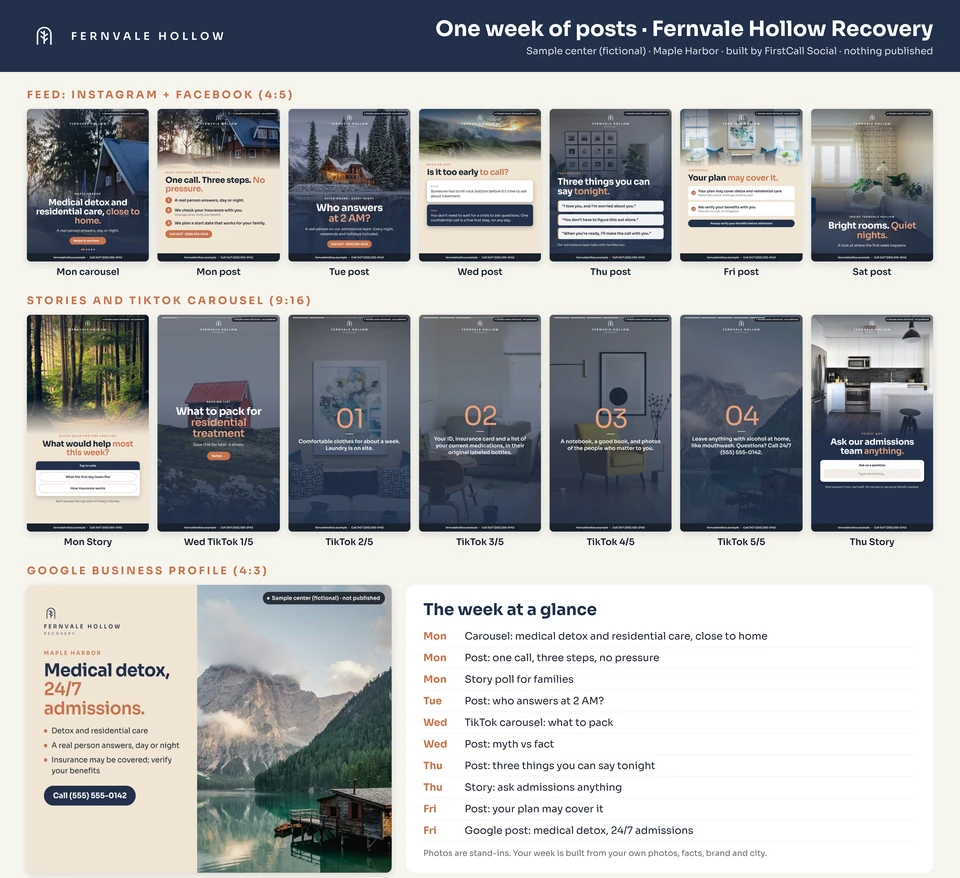
A feed that hasn't been updated in months, or that's full of stock photos, quietly answers that question for them. If you run paid ads, families often do that check after clicking through to your landing page; see how to protect your ad spend. This guide covers what a treatment center's social media should do, what to post, how often, and the rules that make this industry different.
What social media is for in treatment marketing
Social media rarely produces an admission on its own, and nobody honest will promise it does. Its job is earlier in the decision:
- Awareness. Showing up in front of people in your city who are starting to look, through local hashtags, location tags and search inside the apps.
- Trust. Letting families see your rooms, your staff, your food and your approach before they call.
- Engagement. Giving people a reason to save, share, comment or send a message, which tells each platform to show your content to more people.
Calls, admissions and conversations stay with your admissions team. Social media makes sure they're talking to people who already trust you.
Which platforms matter
| Platform | Why it matters for treatment centers |
|---|---|
| Where many people check a center's look and feel. Feed posts, Reels and Stories all matter. | |
| Strong with parents and spouses, who are often the ones researching. | |
| TikTok | Recovery content has a large, active audience, and short videos reach people who don't follow you yet. |
| YouTube Shorts | Short videos that also surface in Google and YouTube search. |
| Google Business Profile | Posts appear on your Google listing, right where local searchers land. |
What to post: content that builds trust
The best-performing treatment content is specific, local and real. A reliable weekly mix:
- Answers to real questions. The five things callers ask admissions most often each deserve a post. "How long does detox take?" "Do you take my insurance?" "Can I keep my job?"
- Your people. Short videos of staff explaining what they do and why. A few 60-second answers recorded on a phone can become two weeks of clips.
- Your place. Rooms, outdoor spaces, meals, group rooms, filmed in natural light.
- Content for families. What to say, what to expect, how to support someone in treatment.
- Myth vs fact. Clear, factual corrections of common misconceptions about addiction and treatment.
- Alumni and family stories, only with a signed release and only from people no longer in your care.
- Reviews, quoted word for word.
Avoid stock photography, vague inspirational quotes, and anything that promises an outcome.
How often to post
Consistency matters more than any single post. A center that wants to be found should aim for a feed post every day, a TikTok every day, two Stories a day, and two or more YouTube Shorts a week. See our guide to how often a rehab should post for a full example week.
Local search: get found in your city
Every caption is a chance to be found locally. Rotate one location angle per day: a neighborhood, your city, your region, your state, and, if you accept travelers, out-of-state phrases like "traveling for rehab." Add a location line before the hashtags, tag your location, and mix short phrases ("rehab [city]") with specific ones ("medical alcohol detox in [neighborhood]").
The rules that make this industry different
- Never pay per lead or admission. Federal law (EKRA) and many state laws prohibit paying for patient referrals. Pay marketers a flat fee. Read our EKRA guide.
- Protect patient privacy. Never confirm that someone is or was a patient, even in reply to their own comment. Read our patient privacy guide.
- Get releases first. Anyone who appears on camera, staff included, signs a written release before filming.
- No outcome claims. No cures, guarantees or success rates.
- Point people in crisis to help. Mental-health posts should include the 988 Suicide & Crisis Lifeline.
- Paid ads need certification. Meta and Google require LegitScript certification for addiction treatment ads. Organic posting doesn't.
How to measure it
Track reach, followers, profile visits, website clicks and messages each month, and compare them with your starting point. Be careful about crediting social media with admissions directly: people see a center in many places before they call.
Doing it yourself vs hiring help
A full week of strong content runs from about 10 well-made pieces to 40 or more across five platforms. Most centers don't have the staff time, and general agencies often don't know the industry's rules. Whoever does it, the essentials are the same: real content, every day, built only from facts you can stand behind.
Keep reading
- 50 social media post ideas for treatment centers, and how to keep them coming every week
- How often should a rehab post on social media? An example week
- Why your rehab's Instagram isn't growing, and how to fix it
- Detox center marketing: a social media playbook for withdrawal management programs
This article is part of social media for treatment centers: the basics. Browse every guide by topic.
Planning for your market? See social media for treatment centers in your state, compare our flat monthly pricing, or grab the free 30-day calendar.