
PHP marketing on social media works when your feed makes a full day of treatment feel concrete. A partial hospitalization program asks a lot of someone: most of the day, most days of the week, while they still sleep at home. The person deciding wants to picture that day before they call. Your posts should show the schedule, the team and the next step plainly, every week, so a family can see what Monday at your program actually looks like.
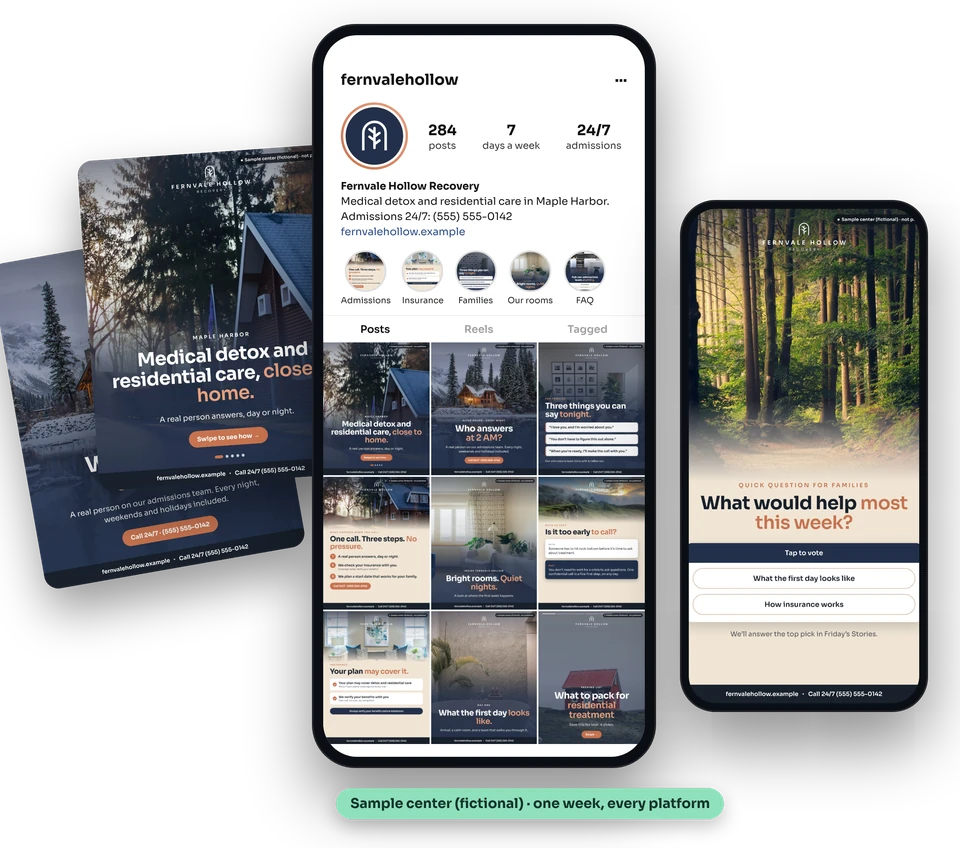
This guide covers who really decides on a PHP, the questions they ask before calling, six post types that work, what to keep off your feed, and a sample week you can copy. If you also run an intensive outpatient track, read it alongside our IOP marketing guide; the two audiences overlap, but they don't ask the same things.
Who decides on a partial hospitalization program
A PHP sits between inpatient or residential care and outpatient care, so people arrive from two directions. Your feed has to speak to both.
- People stepping down. Someone finishing detox, residential or an inpatient psychiatric stay, and the family helping them plan what comes next. They want to know care won't drop off a cliff on discharge day.
- People stepping up. Someone whose weekly therapy or IOP isn't enough right now, and who wants more support without moving into a facility. Often a spouse or parent is reading over their shoulder.
- Referral partners. Hospital discharge planners, psychiatrists, therapists and residential programs who need a place they trust for the next level of care. They check your feed to see if you're active, staffed and clear about who you serve.
A program that only posts to one of these groups leaves the others guessing.
The questions families ask before they call
In admissions, the same questions come up again and again. Your feed can answer most of them before the phone rings:
- What does a day look like? Start time, end time, groups, individual sessions, meals and breaks.
- Who will I see? Psychiatrists, therapists, nurses and case managers: real people with real titles.
- Can I go home at night? Yes, and families want to see that written plainly.
- What do you treat? Substance use, mental health or both. If you treat co-occurring conditions, our dual diagnosis program guide covers how to explain it.
- What happens after PHP? The step down to IOP or outpatient, and what aftercare looks like.
- How do I start? Who answers the phone, what the first call covers and how quickly an assessment can happen.
Six PHP post types that work
1. A day in the program
One carousel that walks through a typical day, hour by hour, using your real schedule and your real rooms, with no clients in frame. Pin it to the top of your profile. It answers the biggest question a family has.
2. Meet the clinical team
A short post for each psychiatrist, therapist, nurse and case manager, with a photo, their title as your website lists it and one sentence on what they do in the program. Only post staff who've signed a release.
3. Step-down explained
A simple graphic showing how someone moves from residential or inpatient care into PHP, then to IOP and outpatient. Only list levels of care you actually offer and are licensed to provide. If you refer out for a level, say so.
4. Who PHP is for, and who it isn't
A calm, honest post about when day treatment fits and when someone needs a higher level of care. Families trust a program that tells them when it isn't the right fit. Point anyone in crisis to 988.
5. Referral partner posts
Discharge planners and clinicians want practical details: how to send a referral, what information you need, how quickly you can do an assessment and how you coordinate care. One clear post a month keeps you on their list.
6. The space
Group rooms, the kitchen or lunch area, quiet corners, parking and the front door. Someone nervous about their first day wants to know where to walk in and where to sit.
What to keep off your feed
PHP clients are in treatment during the day, often in the same rooms you'd want to photograph. That makes privacy the first rule for every post:
- No clients in photos or videos, even from behind, even blurred, even with permission. Shoot rooms before the program opens or after it closes.
- No stories that could identify anyone, including "a client told us" quotes and milestone posts. Our guide to HIPAA and 42 CFR Part 2 on social media covers the basics.
- No outcome promises. Words like "cure", "guaranteed" or success rates don't belong in a post about care.
- No incentives to enroll, such as free transportation offered as a perk, gift cards or referral thank-yous. Our EKRA guide explains why.
- No replies that confirm someone is a client. Answer comments with general information and a phone number, never details about a person.
Licensing and advertising rules also vary by state. Our state guides, like New Jersey and Ohio, cover the agency names and marketing laws to get right, and the state hub lists the rest.
A sample PHP week
Here's a simple week you can copy. It mixes the three audiences so nobody waits a month to see something for them.
- Monday: "A day in our PHP" carousel, with the schedule, rooms and lunch.
- Tuesday: Meet one clinician: photo, title and what they do in the program.
- Wednesday: Step-down graphic, from residential or inpatient care to PHP, IOP and outpatient.
- Thursday: A referral partner post on how to send a referral and what happens next.
- Friday: "Who PHP is for" post, ending with your phone number and 988 for a crisis.
- Saturday: A Story with a photo of the space and a reminder of your weekday hours.
- Sunday: A calm, practical post for families: what to bring on the first day.
Post the same hours, levels of care and phone number on your Google Business Profile, because many people search for "partial hospitalization program near me" before they ever see your feed. Public posts from professional Instagram accounts can also show up in search.
If you run ads for your PHP
Your ads bring families to your landing page. Before they call, most look you up: Google, Instagram, Facebook, TikTok. If your feeds look dead, the click you paid for loses trust. A feed with this week's schedule, real clinicians and the same phone number as your ad backs up the click. Read how to protect your ad spend, or why paying for clicks to a dead Instagram costs more than it looks.
If your program also offers mental health day treatment, our mental health treatment center guide covers that audience, and the detox center marketing playbook covers the step before PHP for many clients.
How FirstCall handles this for PHP programs
FirstCall Social was founded by a treatment center owner, so we know what step-down families, step-up clients and referral partners ask before they call. We create the ideas, then write, design, check and publish your posts every week, from 5 to 20+ a week depending on your plan, for one flat monthly fee, never per lead, call or admission. We're organic only and don't run ads. Every post is checked for patient privacy and claims before it goes live. See what each plan includes.
Want to see it first? We'll build you a free sample week from your website, including a day-in-the-program post. Get a free sample week.
If you're in crisis, call or text 988.
Keep reading
- Social media for mental health treatment centers: what to post, what to avoid
- Dual diagnosis program marketing: social media for co-occurring care
- Behavioral telehealth marketing: social media for virtual care programs
- Social media marketing for addiction treatment centers: a practical guide
This article is part of playbooks by program type. Browse every guide by topic.
Planning for your market? See social media for treatment centers in your state, compare our flat monthly pricing, or grab the free 30-day calendar.