
MAT clinic marketing on social media has one job: make the first visit feel possible. Someone thinking about medications for opioid use disorder is often worried about cost, about being judged, about losing a job or about what happens on day one. Your feed should answer those questions in plain language, show the real people who will greet them, and stay current every week, so the call to your front desk feels like a small step instead of a big one.
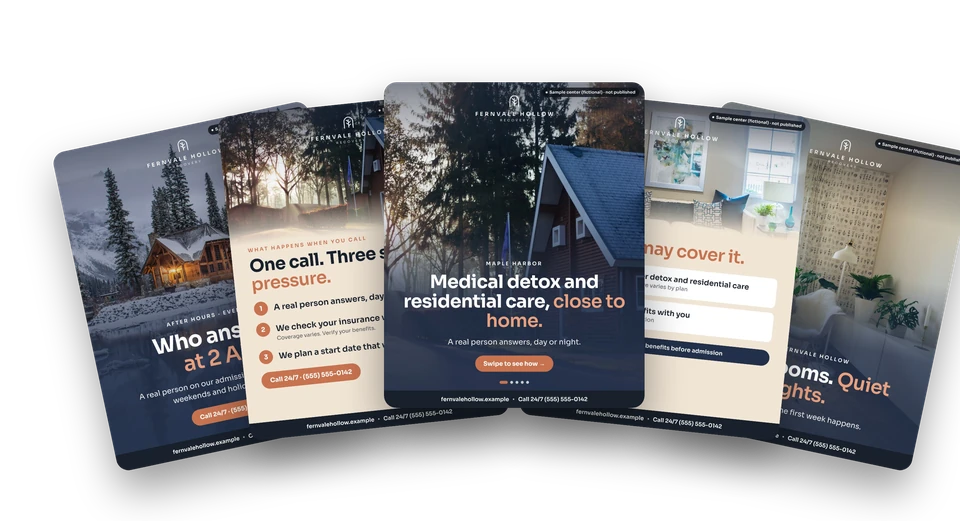
This guide covers who decides on medication-assisted treatment (MAT), the questions people ask before a first visit, six post types that work for office-based clinics and opioid treatment programs (OTPs), what to keep off your feed, and a sample week you can copy. If your program also runs detox or outpatient tracks, read it alongside our detox center marketing playbook and our IOP marketing guide.
Who decides on MAT
A first visit to a MAT clinic is usually a quiet, personal decision, but a few people shape it.
- The person who wants to start. Often in the middle of a hard week, looking at their phone late at night, and most worried about practical things: how fast they can be seen, what it costs, whether they'll be treated with respect.
- The family member who helps. A partner, parent or adult child who searches, reads your posts and sometimes makes the first call. They want to know the clinic is real, open and safe.
- Referral partners. Emergency departments, primary care offices, probation officers, detox units and residential programs that need a place to send someone for ongoing care. They check whether you're active, what you offer and how quickly you take new patients.
- The person paying. Insurance, Medicaid or self-pay. They want plain answers about what's covered and what to bring.
A feed that only speaks to one of them leaves the others guessing.
What has changed for MAT providers
Two federal changes matter for how you explain your services.
More prescribers can offer buprenorphine. Section 1262 of the Consolidated Appropriations Act, 2023 removed the federal requirement for practitioners to submit a Notice of Intent (the old DATA-Waiver) to prescribe buprenorphine for opioid use disorder (SAMHSA). State law can still add its own rules. For your marketing, it means more primary care and psychiatry offices can offer it, so families have more choices, and your feed has to show why your clinic is a good one to call.
Opioid treatment program rules were updated. OTPs that dispense methadone are governed by 42 CFR Part 8 (SAMHSA), and HHS published a final rule updating Part 8 in February 2024 (Federal Register). If you run an OTP, have your medical director confirm how your clinic applies the current rules before you post about take-home doses, scheduling or intake.
This is general information, not legal or medical advice.
The questions people ask before a first visit
Front desk staff at MAT clinics hear the same questions again and again. Most can be answered on your feed before anyone calls:
- How soon can I be seen? Same day, next day, walk-in hours. Say what's true this week.
- What happens at the first visit? Paperwork, the intake conversation, who they'll meet and how long it takes.
- What do you offer? Buprenorphine, methadone, naltrexone, counseling, or a mix. Name exactly what your license and your clinicians cover.
- Do you take my insurance? Medicaid, which commercial plans, self-pay. Keep it simple and point to the phone line for details.
- Will anyone find out? Explain your privacy practices in general terms, and point to our guide on HIPAA and 42 CFR Part 2 on social media for your own team.
- Will I be judged? Show the faces and words of the people who answer the phone and staff the front desk.
6 post types that work for MAT clinics
- "Your first visit" carousel. Five slides that walk through arrival, check-in, the intake conversation and what happens next. Use photos of your actual lobby with no patients in frame.
- Meet the team. One staff member per post: a nurse, a counselor, the front desk lead. Name and role only, with a signed release on file.
- Myth vs. fact. Short, calm posts that correct common misunderstandings about medications for opioid use disorder, sourced from SAMHSA or your medical director. No promises about outcomes.
- Hours and access. A weekly post with this week's intake hours, walk-in times and holiday changes. It's the most useful post for referral partners.
- For families. How to support someone starting treatment, what to say, what not to say, and how to reach you.
- Community and partners. Naloxone events, a health fair table, a thank-you to a local partner. Real dates, real places.
What to keep off your feed
- Patients. No faces, names, stories, check-in photos or anything that could identify someone in care, even with permission in a comment.
- Outcome claims. No "cure", success rates, "best" or promises of how fast someone will feel better.
- Dosing and medical advice. General education is fine. Individual dosing questions belong with a clinician, never in a caption or DM reply.
- Paid-referral language. Never offer anything of value for a referral or for starting treatment. Read our EKRA marketing guide before you post any partner promotion.
- Comparisons with other clinics. Talk about what you do, not what others don't.
A sample week for a MAT clinic
- Monday: "Your first visit" carousel.
- Tuesday: Meet the front desk lead who answers most first calls.
- Wednesday: Myth vs. fact on medications for opioid use disorder, with a SAMHSA source.
- Thursday: This week's intake and walk-in hours.
- Friday: A family post: how to support someone in their first month.
- Saturday: A Story with a photo of your waiting room or a naloxone kit display.
- Sunday: Community post: a partner thank-you or upcoming local event.
Post the same hours, services and phone number on your Google Business Profile, because many people search "suboxone clinic near me" or "methadone clinic near me" and see your profile before your website. Public posts from professional Instagram accounts can also show up in search. Rules differ by state, so check our Texas and Arizona guides, or browse treatment center guides by state.
If you run ads for your clinic
Your ads bring people to your landing page. Before they call, most look you up: Google, Instagram, Facebook, TikTok. If your feeds look dead, the click you paid for loses trust. Google requires LegitScript and Google certification for U.S. addiction treatment ads (Google Ads policy), and a feed with this week's hours, real staff and the same phone number as your ad backs up the click. Read how to protect your ad spend.
Frequently asked questions
How often should a MAT clinic post on social media? Several times a week at a minimum, and daily if you can. People starting treatment often look you up more than once before they call. Our guide on how often a rehab should post goes deeper.
Can we post about methadone and buprenorphine by name? Yes, as general education, using accurate wording your medical director has approved. Avoid dosing advice and anything that reads like a promise.
Do we need LegitScript to post on social media? No. LegitScript certification is required for paid addiction treatment ads on platforms like Google and Meta. Organic posts on your own accounts don't need it.
Should a MAT clinic be on TikTok? If your team is comfortable on camera, short videos that show the lobby, the front desk and what a first visit looks like can help. Read our TikTok guide for treatment centers.
How FirstCall handles this for MAT clinics
FirstCall Social was founded by a treatment center owner, so we know what people ask before they call a clinic. We create the ideas, then write, design, check and publish your posts every week, from 5 to 20+ a week depending on your plan, for one flat monthly fee, never per lead, call or admission. We're organic only and don't run ads. Every post is checked for patient privacy and claims before it goes live. See what each plan includes.
Want to see it first? We'll build you a free sample week from your website, including a "your first visit" carousel. Get a free sample week.
If you're in crisis, call or text 988.
This article is general information, not legal advice. Talk to a healthcare attorney about your center.
Keep reading
- Social media for mental health treatment centers: what to post, what to avoid
- Dual diagnosis program marketing: social media for co-occurring care
- Behavioral telehealth marketing: social media for virtual care programs
- Social media marketing for addiction treatment centers: a practical guide
This article is part of playbooks by program type. Browse every guide by topic.
Planning for your market? See social media for treatment centers in your state, compare our flat monthly pricing, or grab the free 30-day calendar.